
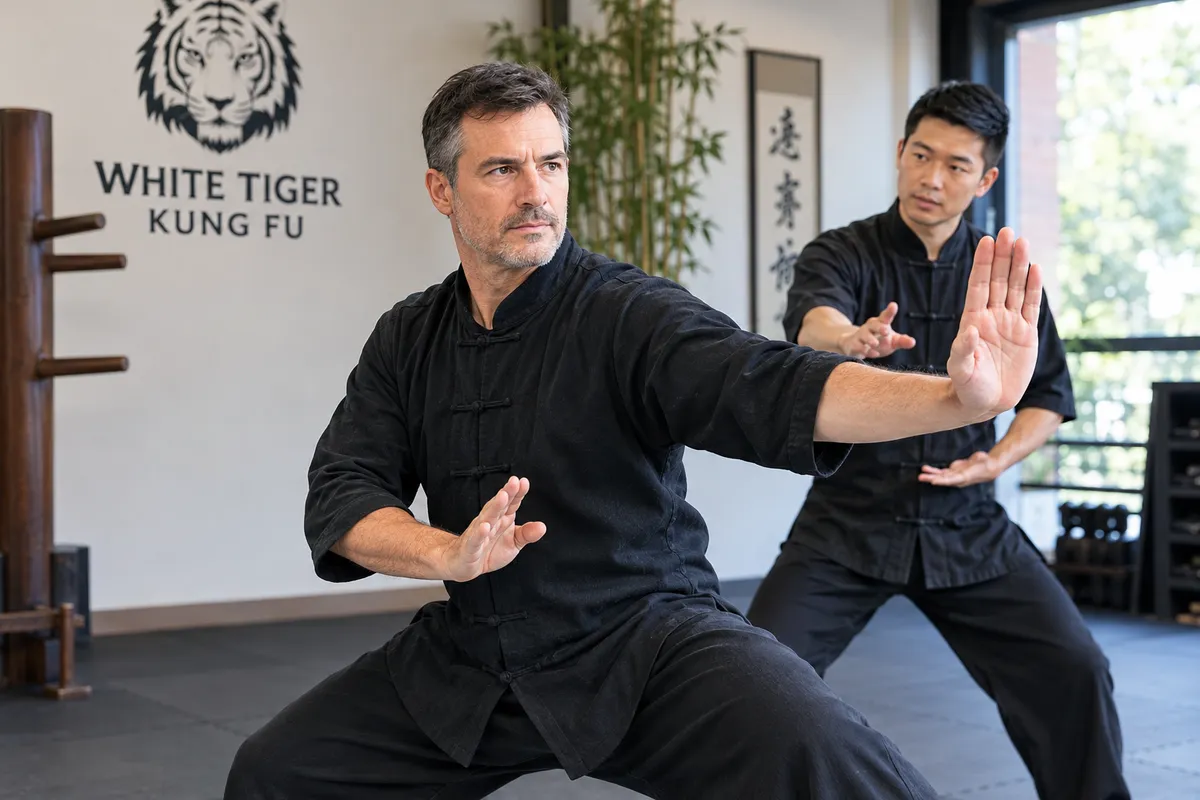
Martial Arts After 40: Is It Too Late to Start Learning Kung Fu?
If you are over 40 and thinking about learning Kung Fu, you may be wondering whether you have missed your chance. Perhaps you feel less flexible than you used to, worry about keeping up with younger students, or simply do not know where to begin. The good news is that martial arts after 40 can be a rewarding way to develop fitness, coordination, confidence, and practical skills when you choose an approach that suits your abilities.
You do not need to be an athlete or have previous martial arts experience to begin. Learning Kung Fu as an adult is about steady progress, consistent practice, and understanding your own limits. With patient instruction and realistic goals, adults can start training at different stages of life.
Is 40 Too Old to Learn Kung Fu?
No. Turning 40 does not automatically make you too old to learn Kung Fu. Martial arts training can be adapted to different fitness levels, experience levels, and individual needs.
Beginners do not need to master complicated techniques immediately. A suitable class can introduce basic stances, controlled movements, balance exercises, coordination, and simple forms before gradually progressing to more challenging skills.
If you have been searching for martial arts after 40 or learning martial arts as an adult, the most important consideration is not your age alone. It is whether the training environment, instructor, and pace are appropriate for you.
You can also explore our related guide, Is It Ever Too Late to Start Martial Arts as an Adult?, for more information about beginning your martial arts journey later in life.
Benefits of Learning Martial Arts After 40
Improve Balance and Coordination
Kung Fu practice involves controlled footwork, changes in direction, coordinated arm and leg movements, and maintaining stable positions. These activities challenge your body to work in a more coordinated way.
As you practise regularly, you can work toward better movement control and body awareness. Beginners should start with comfortable movements and gradually increase the difficulty as their technique improves.
Build Strength and Functional Fitness
Kung Fu uses bodyweight movements, stances, controlled transitions, and repeated techniques. Depending on the class, these activities can contribute to muscular endurance, mobility, and general physical conditioning.
For adults who prefer skill-based exercise over repetitive gym workouts, martial arts can offer a more engaging way to stay active. Read our article on Martial Arts and Functional Core Strength to learn how martial arts movements engage the muscles that help support posture and movement.
Support Focus and Mental Discipline
Learning a new skill requires attention. You may need to remember a sequence, follow an instructor's demonstration, coordinate your movements, and correct small mistakes.
This process can make training mentally engaging while encouraging patience and consistency. Progress may feel slow at first, but learning a technique one step at a time can help you develop a more disciplined approach to practice.
Manage Everyday Stress
Many adults balance work, family responsibilities, and other commitments. A regular Kung Fu class can provide dedicated time away from everyday distractions.
Physical activity may support mood and general well-being, while structured practice gives you something constructive to focus on. The experience differs from person to person, and martial arts should complement—not replace—professional support when needed.
You can learn more in our guide, Can Martial Arts Help with Stress Relief?.
Develop Confidence and Self-Defense Awareness
Martial arts training can help adults become more familiar with movement, distance, balance, and controlled responses. Learning how to stay composed and practise basic defensive skills may also increase confidence.
However, no martial art guarantees safety in a real confrontation. Effective self-defense includes awareness, setting boundaries, avoiding dangerous situations when possible, de-escalation, and escaping to safety rather than trying to win a fight.
For more on this subject, read How Martial Arts Equip You for Real-World Protection.
How to Start Learning Kung Fu as an Adult
Choose a Class That Welcomes Beginners
Look for adult Kung Fu classes that allow new students to learn at a manageable pace. Ask whether the instructor offers modifications for different fitness levels and explains techniques clearly.
A good learning environment should encourage questions, respect personal limits, and emphasise safe practice instead of pressuring everyone to perform at the same level.
You can visit the White Tiger Kung Fu classes page to explore the available training options.
Be Honest About Your Current Fitness
You do not need to reach a particular fitness level before trying martial arts. However, it helps to understand your current abilities and communicate any relevant physical limitations to your instructor.
If you have a chronic health condition, significant joint problems, balance concerns, or have been inactive for a long time, consider speaking with a healthcare professional before starting strenuous exercise.
A beginner programme can often be adjusted to focus on controlled movements and gradual progress rather than intense conditioning from the beginning.
Start With the Fundamentals
Your early classes may cover basic stances, simple hand techniques, footwork, coordination, and introductory forms. These foundations help you understand how movements fit together.
Avoid comparing your progress with someone who has trained for years. Your goal is to build a reliable foundation and improve at a pace that works for you.
Our article, What to Expect in Your First Two Weeks of Martial Arts Classes, can help you understand what beginning martial arts training may feel like.
Set Realistic Training Goals
Instead of expecting rapid results, create goals that you can maintain. You might aim to attend classes consistently, remember a basic form, improve your balance, or practise a technique with better control.
Your schedule will depend on your availability, fitness, recovery, and the recommendations of your instructor. Consistency matters more than trying to do too much too soon.
Give Yourself Time to Recover
Recovery is an important part of learning martial arts, particularly when you are adapting to a new activity. Allow yourself enough rest between demanding sessions, stay hydrated, and pay attention to how your body responds.
Mild muscle soreness can occur when beginning exercise, but sharp pain, persistent joint pain, dizziness, or unusual shortness of breath should not be ignored. Stop the activity and seek appropriate medical advice when necessary.
What If You Are Not Flexible or Fit Enough?
Many beginners assume that they must already be flexible, strong, or athletic before joining a Kung Fu class. In reality, these are areas you can work on progressively.
A suitable beginner class may include gentle mobility exercises, basic stances, controlled stepping, and modified movements. You can improve gradually without forcing your body into uncomfortable positions.
If flexibility is a concern, tell your instructor before class. Avoid copying advanced students or pushing through pain to match someone else's range of motion.
The aim is not to perform every movement perfectly on your first day. It is to learn safely and build confidence through regular practice.
Kung Fu or the Gym: Which Is Better After 40?
The better choice depends on your goals and personal preferences.
A gym programme can be useful for structured strength training, cardiovascular exercise, and targeted fitness goals. Kung Fu combines physical activity with movement skills, technique, coordination, and learning a traditional martial art.
Some adults enjoy Kung Fu because they prefer practising skills over repeating the same exercise routine. Others benefit from combining martial arts with walking, strength training, or other forms of physical activity.
You do not have to choose only one. A balanced routine that fits your lifestyle and recovery needs may be the most sustainable option.
Common Mistakes Adults Make When Starting Martial Arts
One common mistake is expecting immediate results. Learning new movements takes repetition, and progress is rarely identical for every student.
Another is comparing yourself with younger classmates or experienced practitioners. Everyone starts with a different background, so measure progress against your own previous ability.
Some beginners also try to train too intensely too early. Gradually increasing the difficulty gives your body time to adapt and can help you establish a lasting routine.
Finally, do not choose a class based only on how challenging it looks. Instructor communication, safety, beginner support, and a respectful atmosphere are equally important.
Is Kung Fu Worth Learning After 40?
For adults who enjoy learning new skills and want an active hobby, Kung Fu can be a worthwhile option after 40. It offers opportunities to practise coordination, build physical conditioning, develop focus, and learn in a structured environment.
Your experience will depend on the instructor, training style, consistency, and your personal goals. You do not need to aim for competition or advanced forms to benefit from learning. Progress can be as simple as feeling more comfortable with basic movements and becoming more confident in class.
The best way to find out whether Kung Fu suits you is to ask questions, discuss your goals, and try an introductory class if one is available.
Frequently Asked Questions
Is 40 too old to learn Kung Fu?
No. Adults can begin learning Kung Fu after 40. Start with a beginner-friendly class, communicate your needs to the instructor, and progress according to your ability.
How often should a beginner over 40 practise martial arts?
The right schedule depends on your fitness, recovery, and class intensity. Start with a manageable routine and increase training gradually if you feel comfortable.
Can I learn Kung Fu if I am not flexible?
Yes. You do not need advanced flexibility to begin. Start with comfortable movements and work on mobility gradually without forcing stretches or positions.
Is Kung Fu good for self-defense?
Kung Fu may teach movement, distance awareness, coordination, and defensive techniques. Practical self-defense also requires situational awareness, de-escalation, and knowing when to leave a dangerous situation.
Should I consult a doctor before starting martial arts after 40?
Not every healthy adult needs medical clearance before beginning light or moderate activity. However, if you have health concerns, significant pain, chronic conditions, or have been inactive for a long time, professional guidance can help you decide how to start safely.
Start Your Kung Fu Journey at Your Own Pace
Being over 40 does not mean you have missed your opportunity to learn something new. With a supportive instructor, sensible goals, and consistent practice, you can explore Kung Fu at a pace that suits your needs.
Whether your motivation is fitness, focus, confidence, or learning self-defense skills, begin with the fundamentals and allow yourself time to improve.
Explore White Tiger Kung Fu to learn more about the school and its classes, and take the first step toward a new skill—at any age.