

Martial Arts For Mental Health: Helps Fight Anxiety & Depression?
What Happens in the Brain During Martial Arts Training?
How Combat Training Helps Fight Anxiety & Depression?
Builds Confidence & Self-Esteem
Provides A Healthy Outlet For Stress
Creates Connection And Support
What Makes Martial Arts Different From Regular Exercise For Mental Health?
Are you stressed, anxious, or stuck in a mental fog? You're not alone - and you're not powerless. Martial arts for mental health might be the last thing you'd think of, but it can actually be a powerful tool for healing.
Beyond punches and kicks, it teaches focus, discipline, and inner peace. Whether you struggle with anxiety, depression, or need a healthy outlet, stepping on the mat can change more than just your fitness - it can change your brain.
Let's explore how combat training supports mental health.
What Happens in the Brain During Martial Arts Training?
When you practice martial arts, your brain releases "feel-good" chemicals, including endorphins, dopamine, and serotonin. These chemicals help reduce stress, improve mood, and make you feel more focused and happy. Martial arts also activate the prefrontal cortex, the part of your brain responsible for decision-making, control, and staying calm under pressure.
Over time, this helps you think more clearly and manage emotions better. Regular training also reduces activity in the amygdala, an area associated with fear and anxiety.
So when your body is stronger, your brain becomes calmer and more balanced. It's like a workout for your mind, not just your muscles.
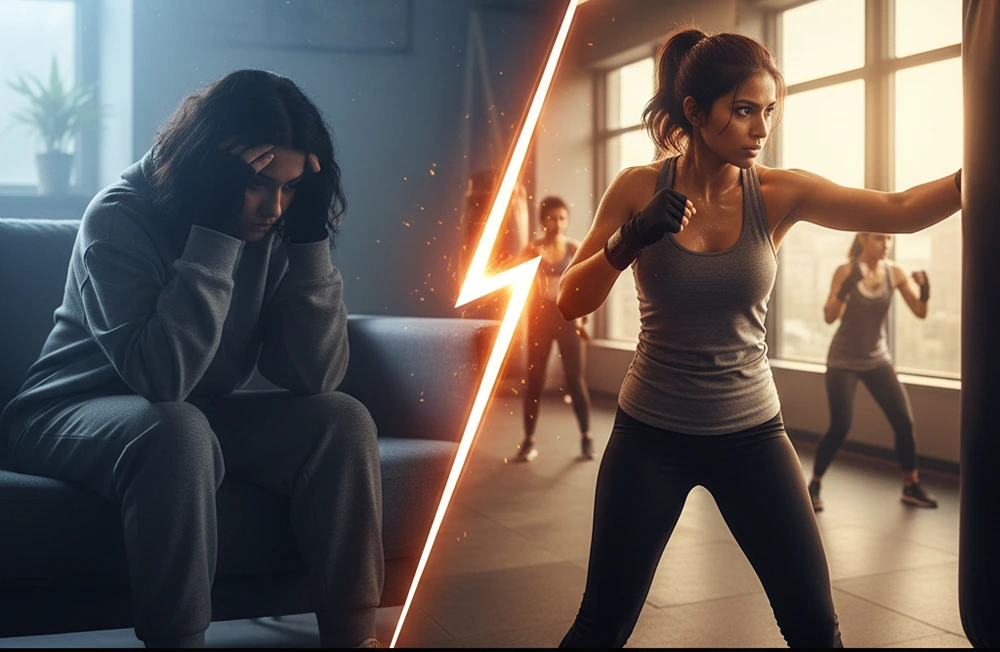
How Combat Training Helps Fight Anxiety & Depression?
Combat training, like martial arts, helps fight anxiety and depression in powerful ways. Look here, how it works:-
Releases Feel-Good Chemicals
Physical activity, such as martial arts training, increases the release of endorphins, serotonin, and dopamine in the brain - these chemicals naturally improve your mood. These "feel good" hormones help reduce feelings of stress, sadness, and anxiety.
Endorphins act like a natural pain reliever, serotonin helps with emotional balance, and dopamine creates a sense of reward and motivation. Together, they provide a powerful mental boost.
This is why, after a good workout or training session, many people feel happier, more relaxed, and mentally refreshed.
Improves Focus & Mindfulness
Combat training helps you stay fully focused on the present moment. When you're practicing punches, kicks, or defensive moves, your mind doesn't have time to wander or dwell on negative thoughts.
This intense focus acts like a kind of moving meditation, pulling you out of your head and into your body.
This helps to stop the cycle of overthinking, which is common with anxiety, and allows you to break free from constant worry. Over time, this mental focus becomes a skill you can use in daily life to feel calmer, more focused, and in control.
Builds Confidence & Self-Esteem
Learning new skills through combat training gives you a real sense of progress and personal growth. As you master techniques, improve your strength, or win a new belt, you begin to feel more competent and confident in yourself.
Every small accomplishment reminds you that you are stronger than you think, both physically and mentally.
This increased confidence helps you feel more in control of your life, which is especially helpful when dealing with anxiety or depression. It turns self-doubt into self-confidence – one step, one punch, one win at a time.
Provides A Healthy Outlet For Stress
Punching, kicking, and moving your body during combat training gives you a powerful and healthy way to release built-up tension and emotions. When you're feeling stressed, anxious, or overwhelmed, that energy often gets trapped inside, making you feel even worse over time.
Martial arts provide a safe space for you to let everything out, both physically and mentally.
Every strike, movement, or combo becomes an outlet for frustration, sadness, or anger. Instead of holding it in, you're actively working through it. This release leaves you feeling lighter, calmer, and more emotionally balanced after each session.
Creates Connection And Support
Being part of a martial arts community does more than just improve your skills. It helps reduce feelings of loneliness and builds a strong sense of belonging. Training alongside others creates real connections, support, and encouragement. Whether it's a coach's smile, a fist bump after a fight, or a shared goal with teammates, these moments remind you that you're not alone.
Over time, the dojo or gym becomes more than just a training space. It becomes a second home where you are seen, supported, and accepted for who you are. Consistent martial arts training helps you break negative thought loops by giving your mind something positive to focus on.
When you’re feeling anxious or down, it’s easy to get stuck in the same thoughts over and over. But when you train regularly, your attention shifts to learning new moves, improving your skills, and reaching small goals. This creates a healthy routine that keeps your mind active and engaged. Over time, the focus, discipline, and structure of training can help you replace negative thoughts with more positive ones.
It teaches you to stay present, build mental strength, and take control of your thoughts - one session at a time.
What Makes Martial Arts Different From Regular Exercise For Mental Health?
There are some crucial things that make martial arts different from regular exercise.
Mind-Body Connection
Martial arts require firm focus, coordination, and self-control, keeping your mind fully engaged in the moment. Unlike regular workouts that can seem repetitive or mindless, martial arts challenge both your body and mind.
This mental engagement helps reduce stress, prevent overthinking, and create a deeper sense of purpose and presence while training.
Built-In Stress Relief
Pad hitting or sparring gives you a safe and powerful way to release stress, anger, or frustration. Instead of keeping emotions bottled up, martial arts help you release them through movement.
It's like a reset for your mind - leaving you feeling calmer, lighter, and more in control after every session.
Boosts Confidence Through Skill Building
In martial arts, you're not just burning calories or getting fit - you're learning new techniques, setting goals, and seeing real progress over time. Every skill you master and every challenge you overcome helps build true confidence and a sense of self-worth.
This type of personal development goes far beyond physical fitness, making you feel stronger, more capable, and more proud of yourself in everyday life.
Teaches Emotional Control
Martial arts teaches you how to stay calm, even when things get tough. During training, you learn to control your breathing, reactions, and emotions under pressure.
These skills don’t just help in a fight - they carry over into daily life, helping you handle stress, stay focused, and make better decisions in difficult situations.
Many psychologists recognize martial arts as a powerful tool for improving mental health. Research shows that regular martial arts practice can help reduce symptoms of anxiety, depression, and stress. The structured nature of martial arts promotes discipline, focus, and emotional regulation, which are important elements in managing mental health.
Psychologists also highlight how physical activity helps release endorphins, improve mood, and reduce emotional stress. Martial arts encourage mindfulness, as students must stay present and aware during training, which helps calm overactive thoughts.
Additionally, the sense of accomplishment and progress boosts confidence and self-esteem over time. Group training also provides social connection, reducing feelings of loneliness and isolation.
Overall, many mental health professionals see martial arts as a beneficial complement to therapy and medication providing both physical activity and emotional support in one empowering practice.
Conclusion
Martial arts is more than just self-defense or a sport - it's a powerful way to achieve mental health success. Through consistent training, it helps you manage stress, build confidence, and stay grounded during life's challenges.
Whether you're facing issues of anxiety, depression, or just need a healthy outlet, martial arts offers a unique blend of physical movement, meditation, and emotional growth. It teaches you how to stay calm, feel strong, and connect with others in a supportive environment.
If you’re looking for a positive, life-changing routine, stepping into the dojo could be the first step toward a stronger, happier mind.
FAQ
Ques1. Can Martial Arts Really Help with Anxiety and Depression?
Ans - Yes, martial arts combine physical movement, focus, and breathing, which help reduce stress, calm the mind, and improve mood naturally.
Ques2. How Do Martial Arts Improve Mental Health?
Ans - Training builds routine, confidence, and self-control. These habits help people feel stronger emotionally and more in control of their thoughts.
Ques3. Are Martial Arts Suitable for Beginners with Anxiety?
Ans - Absolutely. Most classes start slow and supportive, making beginners feel safe, welcomed, and comfortable from day one.
Ques4. How Often Should Someone Train to Feel Mental Health Benefits?
Ans - Practicing 2–3 times a week is enough for many people to feel less anxious, more focused, and emotionally balanced.
Ques5. Can Kids and Teens Benefit Mentally from Martial Arts?
Ans - Yes, martial arts help young people manage emotions, reduce stress, and build confidence during challenging stages of life.