
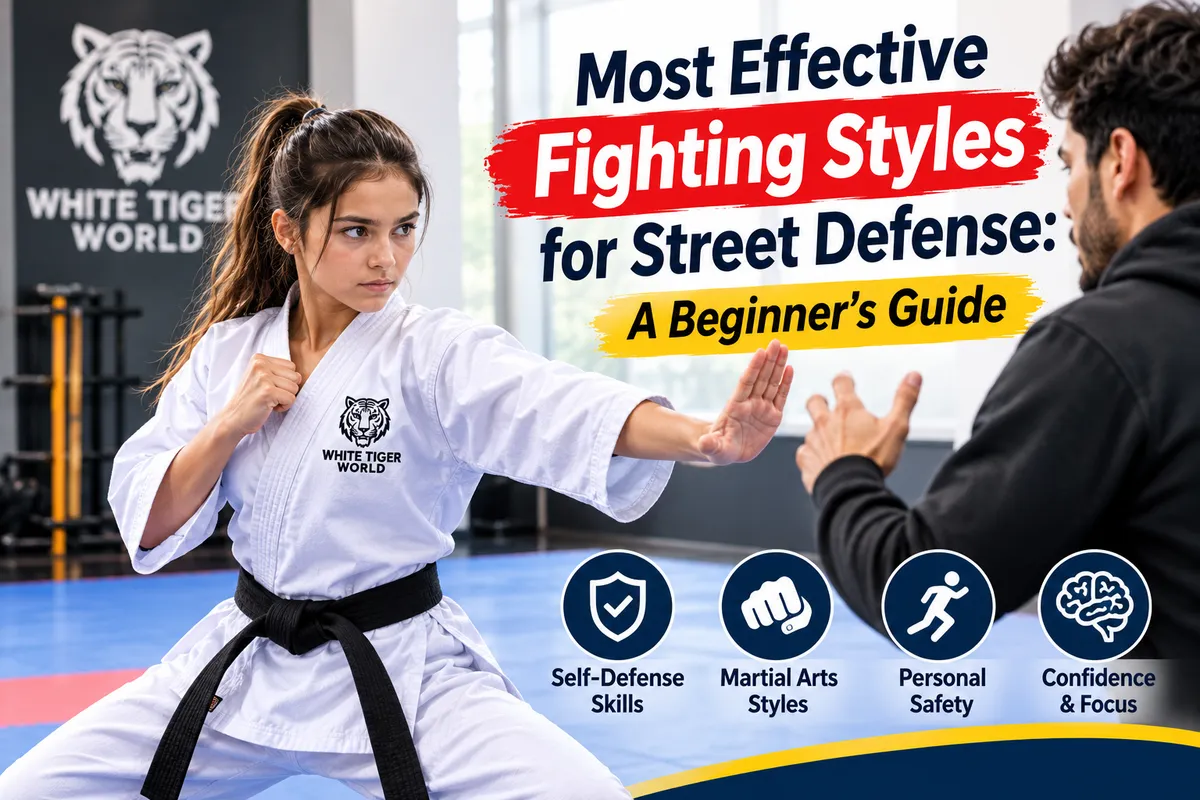
Most Effective Fighting Styles for Street Defense: A Beginner's Guide
Personal safety is something everyone should take seriously. Whether walking through an unfamiliar area, travelling alone, or dealing with an uncomfortable situation, knowing how to protect yourself can make a difference. While no one can predict every situation, learning martial arts can help people develop confidence, awareness, coordination, and practical self-defense skills.
For beginners, choosing the right martial art can feel confusing. There are many different styles, each with its own training methods, techniques, and philosophy. Some focus on striking, others emphasize grappling, while several traditional systems combine physical techniques with balance, discipline, and mental control.
Understanding the most effective fighting styles for street defense starts with knowing what self-defense actually involves. It is not simply about fighting. Recognizing potential risks, avoiding unnecessary confrontation, maintaining a safe distance, and knowing when to leave are equally important.
This guide explores different martial arts styles, their benefits, and what beginners should consider before starting their training.
What Makes a Martial Art Effective for Street Defense?
Not every martial art teaches the same skills. Some styles concentrate on punches and kicks, while others focus on controlling an opponent or escaping physical contact.
When comparing the best martial art for street defense, beginners should consider several factors.
Practical training: A good training program should teach movements that students can understand and practise safely. Techniques should be explained clearly and adapted to different experience levels.
Situational awareness: Recognizing potentially dangerous situations before they escalate is an important part of personal safety.
Balance and coordination: Learning to maintain balance and control body movements can help students become more confident in their physical abilities.
Distance management: Understanding personal space and knowing when to move away from a confrontation can help reduce unnecessary risks.
Consistency: Regular practice helps students become more familiar with techniques and develop better control over their movements.
The best martial arts for street defense are not necessarily the ones that look most impressive. A suitable style should provide practical learning opportunities while emphasizing responsibility, safety, and avoiding violence whenever possible.
Best Martial Arts Styles Beginners Should Know
Different martial arts offer different approaches to physical training and self-defense. Understanding their basic characteristics can help beginners decide which style matches their interests and goals.
Kung Fu
Kung Fu includes a variety of traditional Chinese martial arts systems. Training can involve hand techniques, kicks, stances, coordinated movements, forms, and controlled partner exercises.
Many Kung Fu schools also emphasize patience, respect, discipline, and body awareness. Students gradually develop coordination and learn to perform techniques with greater control.
For beginners interested in traditional martial arts, Kung Fu offers a combination of physical development and personal growth. Training can also introduce students to the importance of timing, movement, and maintaining balance.
Brazilian Jiu-Jitsu
Brazilian Jiu-Jitsu focuses primarily on grappling, positioning, leverage, and ground-based techniques.
Students learn how body positioning and controlled movements influence physical interactions. Training usually includes partner exercises and carefully supervised practice.
For someone researching the best fighting style for street fighting, Brazilian Jiu-Jitsu is worth understanding because it teaches how to manage close-contact situations. However, real-world self-defense also requires awareness of the surroundings, especially because remaining on the ground can create additional risks.
Boxing
Boxing is a striking-based sport that develops footwork, coordination, timing, and upper-body movement.
Beginners learn basic punches, defensive movements, and how to maintain balance while moving. Regular training can also improve cardiovascular fitness and body coordination.
Boxing classes are often suitable for people who want structured physical activity while developing fundamental movement and defensive skills.
Karate
Karate is a traditional Japanese martial art that emphasizes striking techniques, controlled movements, stances, and discipline.
Students commonly practise punches, kicks, blocks, and structured forms. Training encourages attention to detail and the ability to perform movements accurately.
Karate can be a useful starting point for beginners who prefer a structured learning environment. It also promotes respect, patience, and consistent practice.
Muay Thai
Muay Thai is a traditional martial art from Thailand. It is known for its use of punches, kicks, knees, elbows, and clinch techniques.
Training develops physical conditioning, coordination, and controlled striking movements. Beginners generally start with basic techniques before progressing to more advanced exercises.
For people interested in different street fighting martial arts, Muay Thai provides an example of a striking-based discipline. However, sport techniques should always be understood within their proper training environment rather than treated as instructions for real-world confrontations.
How to Choose the Best Fighting Style for Self-Defense
Choosing a martial art depends on your personal goals, physical comfort, and preferred learning environment.
Someone interested in traditional techniques may enjoy Kung Fu or Karate. Another person may prefer the fitness and movement involved in Boxing or Muay Thai. Those interested in grappling may find Brazilian Jiu-Jitsu more appealing.
Before selecting a program, consider the following factors.
Your experience level: Beginners should look for classes that explain fundamental movements instead of expecting students to understand advanced techniques immediately.
Instructor experience: A knowledgeable instructor should prioritize student safety, demonstrate techniques clearly, and provide appropriate guidance.
Training environment: Look for a respectful atmosphere where students can learn without unnecessary pressure or intimidation.
Personal goals: Decide whether you want to improve fitness, learn traditional martial arts, develop confidence, or understand self-defense fundamentals.
Class structure: A balanced program should include warm-ups, technique instruction, supervised practice, and appropriate recovery time.
Choosing the right program is often more valuable than trying to find one universally superior fighting style.
Important Self-Defense Skills Every Beginner Should Develop
Learning martial arts is about more than memorizing physical movements. Effective personal safety also depends on making sensible decisions and understanding your surroundings.
Situational Awareness
Pay attention to your surroundings, recognize unusual behaviour, and avoid unnecessary distractions when travelling through unfamiliar places.
Maintaining Personal Space
Understanding personal boundaries and maintaining a comfortable distance can help prevent unwanted physical interactions.
Staying Calm Under Pressure
Unexpected situations can create stress. Controlled breathing and clear thinking can help people make safer decisions instead of reacting impulsively.
Knowing When to Walk Away
Not every disagreement requires a response. Leaving an uncomfortable situation and seeking assistance is often the safest option.
Practising Under Supervision
Beginners should learn physical techniques in a controlled environment with qualified instruction. Practising without proper guidance can lead to unnecessary injuries.
Why Beginners Should Focus on Prevention Rather Than Fighting
One common misunderstanding about martial arts is that learning to defend yourself means preparing to fight other people.
In reality, responsible self-defense training should encourage students to avoid physical confrontation whenever possible.
Awareness, communication, confidence, and decision-making are important parts of personal safety. Physical techniques should be considered a last resort when there is no safer way to protect yourself.
This approach makes martial arts valuable for people who want to develop practical life skills without adopting an aggressive attitude.
How Martial Arts Training Builds Confidence and Discipline
One of the biggest benefits of martial arts is the opportunity to develop confidence through gradual improvement.
Beginners may initially struggle with coordination, balance, or remembering techniques. With regular practice, these movements become more familiar.
Students also learn to accept feedback, respect instructors, and work towards achievable goals. These experiences can help develop patience and a more positive attitude towards challenges.
Martial arts training can also support physical fitness, body awareness, and personal discipline. These benefits extend beyond the training area and can influence how students approach everyday responsibilities.
Why Traditional Kung Fu Is Worth Exploring
Traditional Kung Fu offers a distinctive learning experience for people interested in martial arts beyond competitive sports.
Its training methods may include hand forms, footwork, stances, coordinated movements, and traditional techniques. Depending on the school and system, students may also explore weapons forms, meditation, and other aspects of traditional practice.
At White Tiger World, Kung Fu provides an opportunity to explore physical training alongside discipline, confidence, and personal development.
For beginners, the important thing is to approach training with patience and an open mind. Developing martial arts skills takes time, and every student progresses at a different pace.
Frequently Asked Questions
What is the best martial art for street defense?
There is no single martial art that is best for every situation. Kung Fu, Karate, Boxing, Brazilian Jiu-Jitsu, and Muay Thai all offer different training approaches. The right choice depends on personal goals, instructor quality, and the type of training provided.
What are the best martial arts for street defense beginners?
Beginners can explore Karate, Kung Fu, Boxing, or Brazilian Jiu-Jitsu. Each provides opportunities to develop coordination, physical fitness, and self-defense awareness through structured instruction.
Is Kung Fu useful for self-defense?
Kung Fu training can develop coordination, balance, movement control, and physical confidence. Its practical value depends on the school's teaching approach and whether students receive appropriate supervised partner training.
What is the difference between martial arts and street fighting?
Martial arts are structured disciplines that teach physical techniques, movement, discipline, and respect. Street fighting generally refers to uncontrolled physical confrontations, which can involve unpredictable risks. Responsible martial arts training emphasizes avoiding violence whenever possible.
Can beginners learn martial arts for personal safety?
Yes. Most martial arts programs offer beginner-friendly instruction. Students can gradually learn basic movements, improve coordination, and develop a better understanding of personal safety.
Does martial arts training improve confidence?
Martial arts can help develop confidence through consistent practice, learning new skills, overcoming challenges, and recognizing personal progress.