
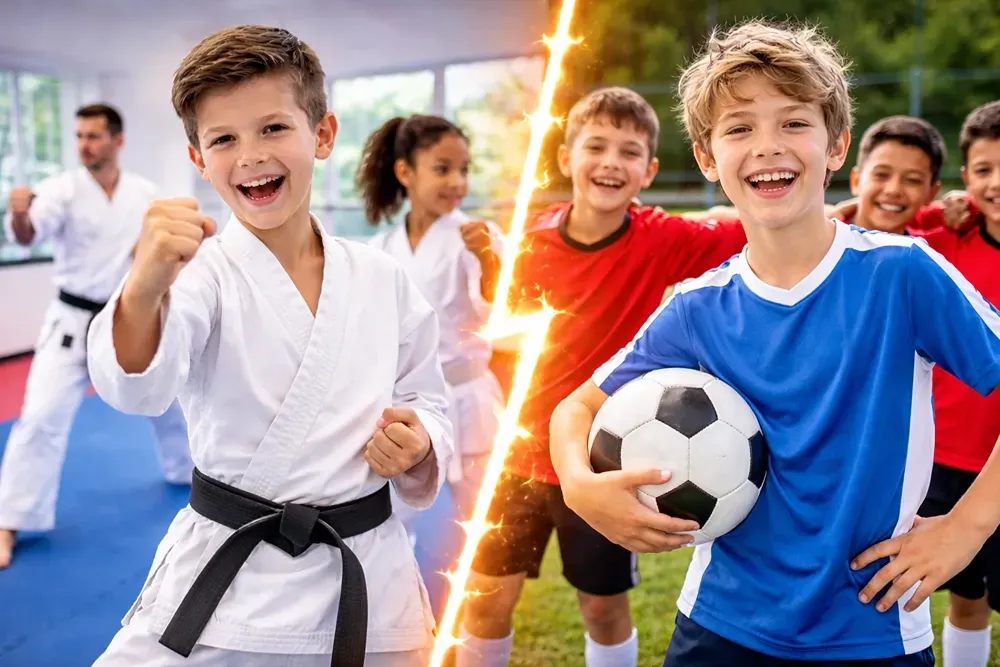
Martial Arts vs Team Sports: Which Builds Character And Why?
Meaning Of Martial Arts And Team Sports
Martial Arts vs Team Sports: Which Builds Character And Why?
Resilience Through Martial Arts
Emotional Control in Martial Arts
Respect and Tradition in Martial Arts
What Life Skills Transfer From Martial Arts To Daily Life?
How Do Martial Arts Help Kids Handle Failure?
Ques1. Can Martial Arts Improve Academic Performance?
Ques2. Is Martial Arts Suitable For All Fitness Levels?
Ques3. How Quickly Do Kids Gain Confidence?
When it comes to character building, both martial arts and team sports offer unique lessons. Martial arts often focus on self-control, respect, and personal growth, while team sports emphasize teamwork, communication, and cooperation.
Parents and students are often confused about which path develops stronger life skills. The truth is that both activities build character in different ways, but the approach and impact are not the same.
In this blog, we will discuss how martial arts and team sports compare and why the differences between them matter.
Meaning Of Martial Arts And Team Sports
Martial arts are a structured system of training that focuses on self-defense, discipline, and personal development. They include styles such as kung fu, karate, taekwondo, and jiu-jitsu, where students learn techniques for both physical strength and mental concentration.
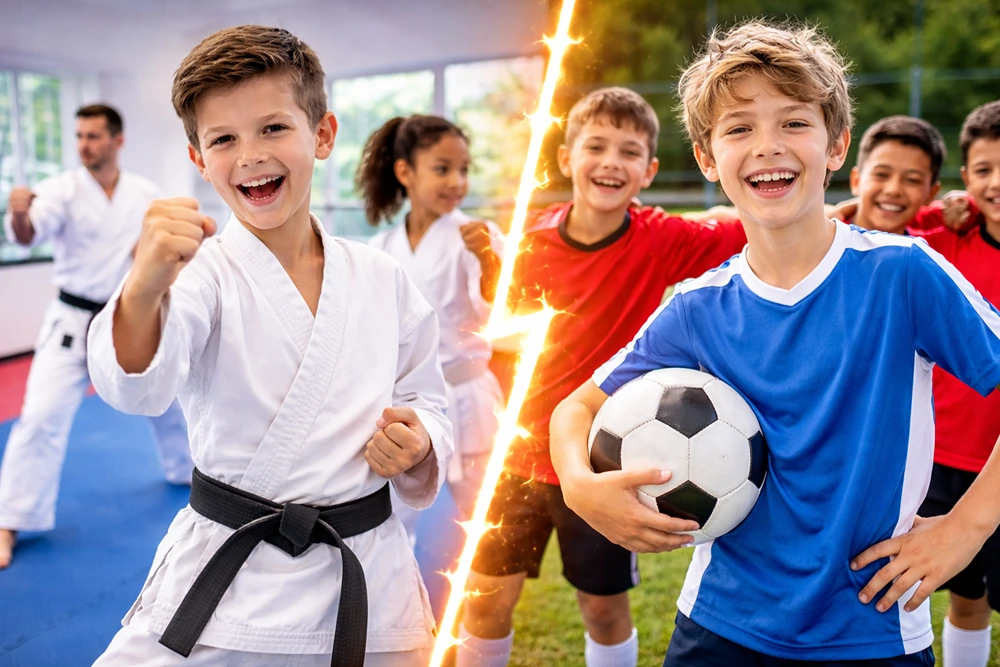
Their main goal is not only self-defense, but also to build respect, confidence, and inner control.
Team sports, on the other hand, are sports played in groups, such as soccer, basketball, or baseball. They focus on teamwork, strategy, and communication to achieve a common goal.
While martial arts focus on individual development, team sports emphasize teamwork and cooperation among players.
Martial Arts vs Team Sports: Which Builds Character And Why?
Both martial arts and team sports build character, but in different ways. Martial arts focus on self-discipline, respect and inner strength through individual progress. Team sports emphasize teamwork, communication and learning to depend on others to achieve goals.
While martial arts encourage individual accountability, team sports provide opportunities for collaboration. Both paths shape character, yet the attitudes and values developed may differ depending on the activity chosen.
Here I explained with the help of points -
Resilience Through Martial Arts
Martial arts help students develop resilience by constantly encouraging them to take on new challenges. Whether it's advancing to belt levels, learning difficult techniques, or preparing for exams, every step requires focus and determination. Students must practice regularly, be patient, and keep trying even after setbacks.
This process teaches them not to give up easily and to persevere even in difficult times. Over time, these lessons develop mental toughness and the confidence to face difficulties in both training and everyday life.
Leadership in Team Sports
Team sports provide many opportunities for players to take on leadership roles. A player can guide their teammates during a match, encourage them when they feel discouraged, or take responsibility for making quick decisions in a game.
These experiences help players develop more confidence in leading others and making decisions under pressure. Leadership in team sports also teaches responsibility, since the outcome often depends on how well the team works together. Over time, these skills prepare players to become strong and collaborative leaders in life.
Emotional Control in Martial Arts
The main purpose of martial arts is to help students control their emotions even in stressful situations. During sparring, competitions or belt exams, students are taught to stay calm and think clearly instead of reacting with anger or fear.
By practicing this control regularly, they learn to handle pressure without losing focus. These skills are not only helpful inside the dojo but also prepare students to cope with the stress, frustration, and challenges of everyday life. Over time, this emotional balance becomes a valuable life skill.
Adaptability in Team Sports
In team sports, players often need to quickly adjust to new positions, strategies, or unexpected game situations. A player may have to switch roles, follow a different plan, or react quickly when the game changes.
This need to constantly adapt builds flexibility in both thinking and actions. Players learn to adapt and keep moving, rather than sticking to one way of doing things. Over time, this adaptability helps them succeed not only in games but also in everyday life.
Respect and Tradition in Martial Arts
Martial arts have deep traditions, from bowing to instructors to respecting training rituals. These practices teach respect for teachers, peers, and cultural values, and help students develop humility and gratitude beyond just physical prowess.
What Life Skills Transfer From Martial Arts To Daily Life?
Martial arts is an activity that certainly teaches some good habits that are useful in daily life.
Discipline That Shapes Every Day
Martial arts teach the importance of routine and discipline. Students learn to show up for training even on difficult days and to continue practicing even when they feel tired. This habit of not giving up builds a strong character and applies to everyday life as well.
Whether it's school, work, or family, this discipline helps people stay focused, work hard, and reach their goals. It reminds us that real success comes from sustained effort, not quick shortcuts.
Confidence to Face Any Challenge
Each new belt or difficult technique mastered gives students a deep sense of pride. This growing confidence doesn’t just stay in the dojo; it becomes a part of their personality. It gives them the courage to speak up at school, pursue their dreams, and face life’s challenges with strength, determination, and confidence.
Respect That Builds Stronger Bonds
In martial arts, respect is shown in many ways, such as bowing in front of the practice and respecting teachers. This practice teaches students to value others and act humbly. Over time, respect becomes part of their character, and it shapes the way they treat their friends, family, and even strangers.
It develops kindness and understanding, and reminds students that strength is not just about power, but also about showing respect and care in everyday life.
Patience in the Journey
Progress in the martial arts doesn't happen overnight. Students have to practice, make mistakes, and keep trying, sometimes for months, before they master a move. This process teaches patience and shows that the best rewards in life take time.
Learning to keep moving forward after failure helps students become strong, disciplined, and resilient, both in the dojo and in everyday life.
Resilience to Rise After Every Fall
Martial arts teaches students to get back up after failure or mistakes. Whenever they falter while learning a technique, they learn to try again with determination.
This resilience helps them cope with the challenges they face in everyday life, and encourages them to overcome obstacles in school, work, or personal situations without giving up.
Emotional Control in Difficult Times
Martial arts training emphasizes staying calm under pressure. Students learn to control anger, frustration, and stress, focusing on clear thinking rather than reacting impulsively.
This emotional control also applies to everyday life, helping them deal with conflict, make better decisions, and maintain composure in stressful situations.
How Do Martial Arts Help Kids Handle Failure?
Martial arts teach children that failure is a normal part of learning, not something to be feared. When practicing new moves or techniques, children often make mistakes or struggle at first. In a supportive dojo, they are encouraged to try again, learn from mistakes, and continuously improve. This process helps them understand that failures are temporary and an opportunity to grow.
By regularly facing small challenges, children develop confidence in their ability to overcome obstacles. They also learn patience, discipline, and problem-solving skills, which help them cope with difficulties in school, sports, or friendships.
Over time, children develop the mindset that mistakes are opportunities, not a reason to give up. Martial arts turn failure into a stepping stone, teaching children perseverance, courage, and the belief that with effort, they can succeed in any area of life.
Conclusion
Both martial arts and team sports provide valuable lessons, but they build character in different ways. Martial arts focus on personal discipline, self-control, and inner growth, and teach students to face challenges independently and reflect on their progress. Team sports, on the other hand, emphasize cooperation, communication, and teamwork, helping participants understand group dynamics and develop social skills.
Choosing between the two depends on the type of character development a person is seeking: martial arts strengthen self-reliance and resilience, while team sports promote cooperation and leadership. Ultimately, both paths build confidence, perseverance, and respect, but through unique experiences.
Incorporating elements of both can provide a holistic approach to character development, giving a person the tools to face life's challenges with strength, empathy, and determination.
FAQ
Ques1. Can Martial Arts Improve Academic Performance?
Ans - Yes, through better focus, memory, and time management, martial arts surely improve academic performance.
Ques2. Is Martial Arts Suitable For All Fitness Levels?
Ans - Yes, classes can be adapted for beginners and advanced students.
Ques3. How Quickly Do Kids Gain Confidence?
Ans - Many people see improvement within just a few weeks of regular practice.
Ques4. Do Team Sports Improve Social Skills More?
Ans - Yes, team sports encourage communication, leadership, and collaboration.
Ques5. Can Kids Benefit From Both?
Ans - Absolutely, combining both gives well-rounded character development.